Nel contesto operativo moderno, la minaccia rappresentata dagli ordigni esplosivi improvvisati (IED) continua a essere una delle sfide più insidiose per le forze armate, le unità di protezione civile e gli operatori di sicurezza. In questo scenario, l’impiego della termocamera si è affermato come uno strumento strategico per la rilevazione preventiva, la verifica tattica e il supporto alla neutralizzazione degli IED.
Cos’è una termocamera e come funziona
La termocamera è un dispositivo ottico che rileva la radiazione infrarossa emessa dagli oggetti, trasformandola in immagini termiche. Ogni corpo emette calore in modo diverso, e queste variazioni possono essere visualizzate per identificare anomalie termiche indicative di manomissioni, interramenti o presenze sospette.
Applicazioni operative nel contrasto agli IED
L’impiego della termografia nel contrasto agli IED si articola in diverse fasi operative:
- Rilevamento di ordigni occultati: gli IED interrati o nascosti sotto superfici naturali o artificiali alterano la distribuzione termica del terreno. La termocamera consente di individuare queste anomalie, soprattutto in condizioni di riscaldamento solare differenziale.
- Ispezione di veicoli e infrastrutture: l’analisi termica di motori, vani interni e superfici strutturali può rivelare compartimenti nascosti o dispositivi attivi.
- Supporto a robot e droni: le termocamere montate su UGV/UAV permettono ispezioni a distanza in ambienti ad alto rischio, riducendo l’esposizione diretta degli operatori.
- Verifica di pacchi e contenitori sospetti: un IED attivo può generare calore residuo da batterie, temporizzatori o circuiti. La termografia consente una prima valutazione non invasiva.
Vantaggi e limiti
Vantaggi:
- Operatività a distanza e in tempo reale
- Compatibilità con altri sensori (GPR, metal detector, spettrometri)
- Utilizzabile in scenari notturni o a visibilità ridotta
Limiti:
- Sensibilità alle condizioni ambientali (vento, pioggia, superfici omogenee)
- Necessità di personale qualificato per l’interpretazione delle immagini
- Non sostituisce altri strumenti C-IED, ma li integra
Integrazione nei protocolli NATO
La termografia è parte integrante dei protocolli NATO C-IED, in particolare nei pilastri:
- Defeat the Device: rilevamento e neutralizzazione
- Prepare the Force: formazione e addestramento
- Attack the Network: analisi forense e intelligence tecnica
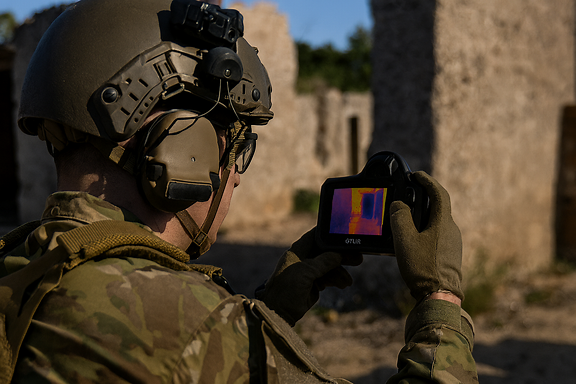
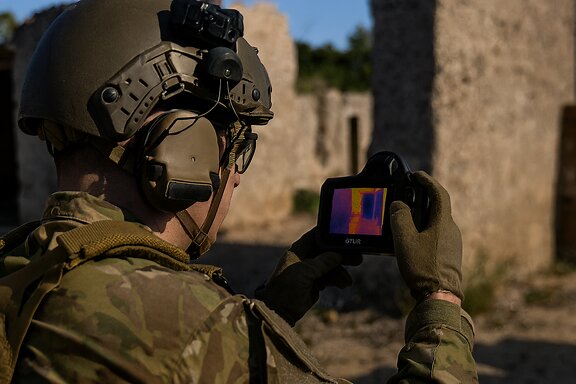
Operatore in assetto tattico che utilizza una termocamera FLIR per rilevare anomalie termiche in un ambiente urbano potenzialmente contaminato da IED
Conclusioni
L’impiego della termocamera nel contrasto agli IED rappresenta un’evoluzione tecnologica e metodologica che rafforza la capacità di prevenzione e risposta delle unità operative. In un contesto dove la rapidità, la sicurezza e la precisione sono fondamentali, la termografia si conferma uno strumento indispensabile per la protezione delle forze e della popolazione.
Aviotech Srl, da sempre impegnata nella formazione e consulenza tecnico-operativa per enti civili e militari, integra l’uso della termografia nei propri moduli didattici e nei protocolli di sicurezza, in linea con gli standard NATO e le esigenze del territorio.
Per approfondimenti o per richiedere un modulo formativo dedicato, contattaci tramite www.aviotechsrl.it