
Le infrastrutture critiche rappresentano la spina dorsale di una società moderna, sostenendo settori vitali come l’energia, le telecomunicazioni, i trasporti e la sanità.
La loro protezione richiede un approccio integrato che comprenda safety, security, ma anche formazione e informazione, elementi fondamentali per garantire una difesa efficace e una risposta tempestiva alle minacce.
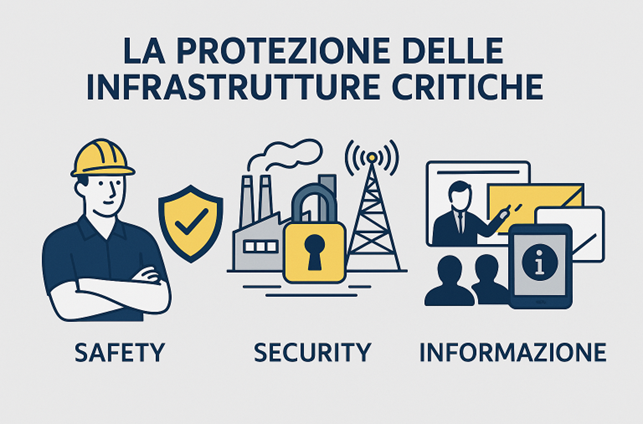
Safety: proteggere da rischi accidentali
La safety riguarda la prevenzione di incidenti e guasti che possono compromettere il funzionamento di un’infrastruttura critica. Questo include:
- La manutenzione preventiva delle strutture e dei macchinari per ridurre guasti tecnici.
- L’adozione di protocolli di sicurezza per la protezione dei lavoratori e degli utenti.
- L’implementazione di sistemi di monitoraggio per rilevare anomalie in tempo reale.
- L’analisi dei rischi naturali, come terremoti o inondazioni, e l’adeguamento delle strutture per resistere a tali eventi.
Security: proteggere da minacce intenzionali
La security, invece, si concentra sulla protezione da attacchi mirati, che possono essere di natura fisica o informatica. Tra le misure chiave troviamo:
- La cyber security, per difendere i sistemi informatici da attacchi hacker e malware.
- Il controllo degli accessi per prevenire intrusioni non autorizzate nelle strutture fisiche.
- L’uso di sistemi di videosorveglianza e sensori per rilevare comportamenti sospetti.
- La cooperazione tra enti governativi e aziende private per la gestione di minacce terroristiche.
L’importanza della formazione per la sicurezza
La preparazione del personale che opera in ambienti critici è un aspetto centrale della protezione infrastrutturale. Un team ben addestrato riduce il rischio di incidenti operativi e migliora la capacità di risposta a situazioni di emergenza. Alcuni aspetti chiave includono:
-Programmi di formazione continua: l’aggiornamento costante su nuove normative, procedure e tecnologie consente di mantenere alto il livello di competenza.
-Simulazioni di emergenza: esercitazioni pratiche per affrontare cyber attacchi, guasti strutturali o altre minacce accrescono la prontezza operativa.
-Certificazioni di sicurezza: qualifiche riconosciute nel settore garantiscono che gli operatori rispettino standard elevati di sicurezza e protezione.
L’informazione come strumento di difesa
Oltre alla formazione del personale, la diffusione di informazioni affidabili e tempestive gioca un ruolo cruciale nella protezione delle infrastrutture critiche. Tra le misure più efficaci:
-Sensibilizzazione pubblica e aziendale: campagne informative per far comprendere l’importanza della sicurezza operativa e digitale.
-Condivisione dei dati tra istituzioni e imprese: collaborare nella raccolta e analisi delle minacce aiuta a individuare modelli di rischio e prevenire attacchi.
-Reportistica e comunicazione di eventi critici: disporre di canali efficienti per notificare guasti o tentativi di intrusione permette una gestione reattiva delle crisi.
Un approccio integrato per una sicurezza totale
La protezione delle infrastrutture critiche non può prescindere da un mix strategico tra tecnologia avanzata, politiche di prevenzione e una solida cultura della sicurezza. Investire nella formazione e nella diffusione di informazioni non solo rafforza la resilienza infrastrutturale, ma contribuisce a costruire una società più consapevole e preparata di fronte alle sfide del futuro.
Garantire sicurezza significa proteggere il presente e costruire il futuro su fondamenta solide e affidabili. Un obiettivo che richiede impegno congiunto tra pubblico e privato, per affrontare i rischi con competenza, prontezza e determinazione.